
Pencil, watercolour and gouache on paper
62.8 x 51 cm
Executed in 1930
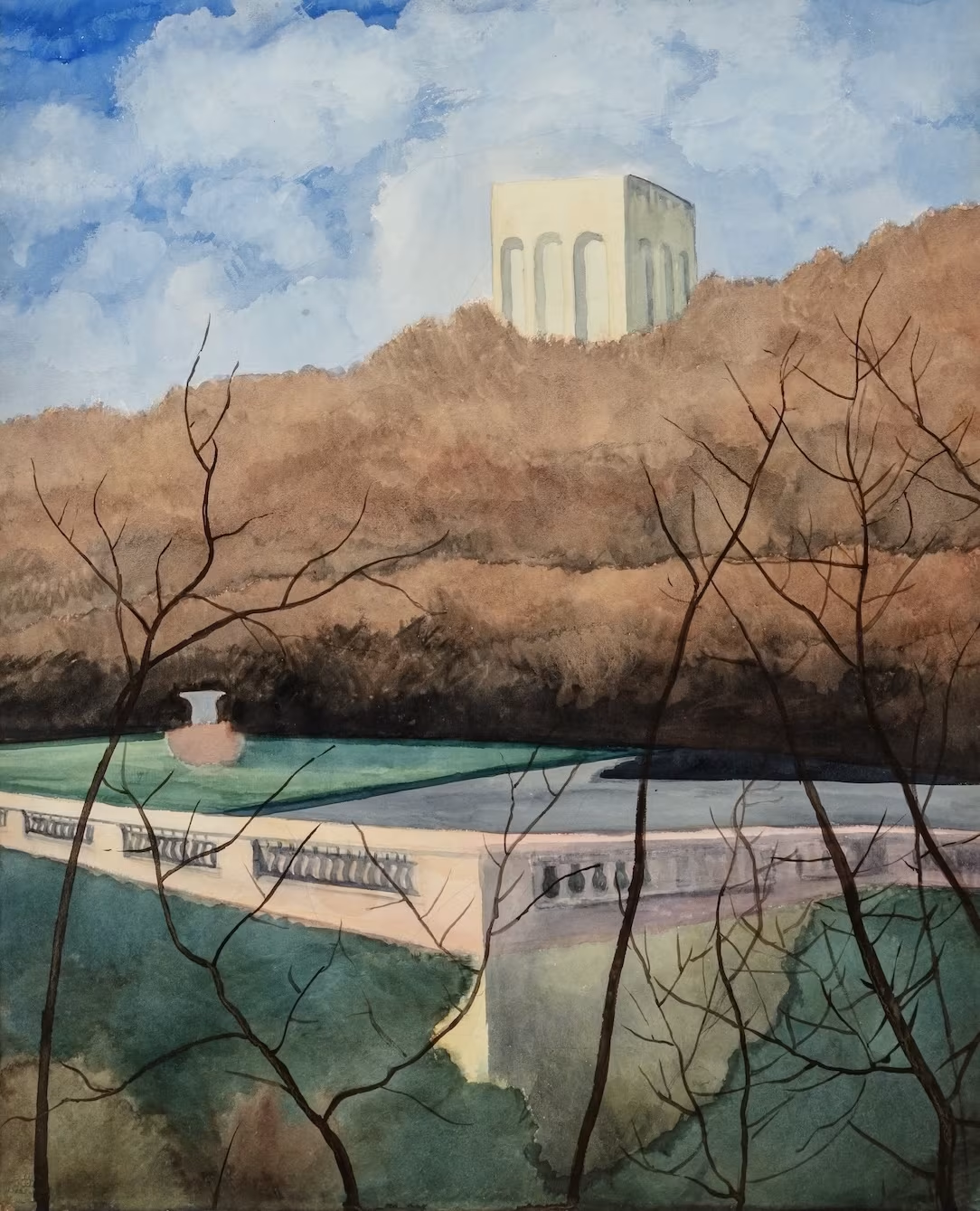
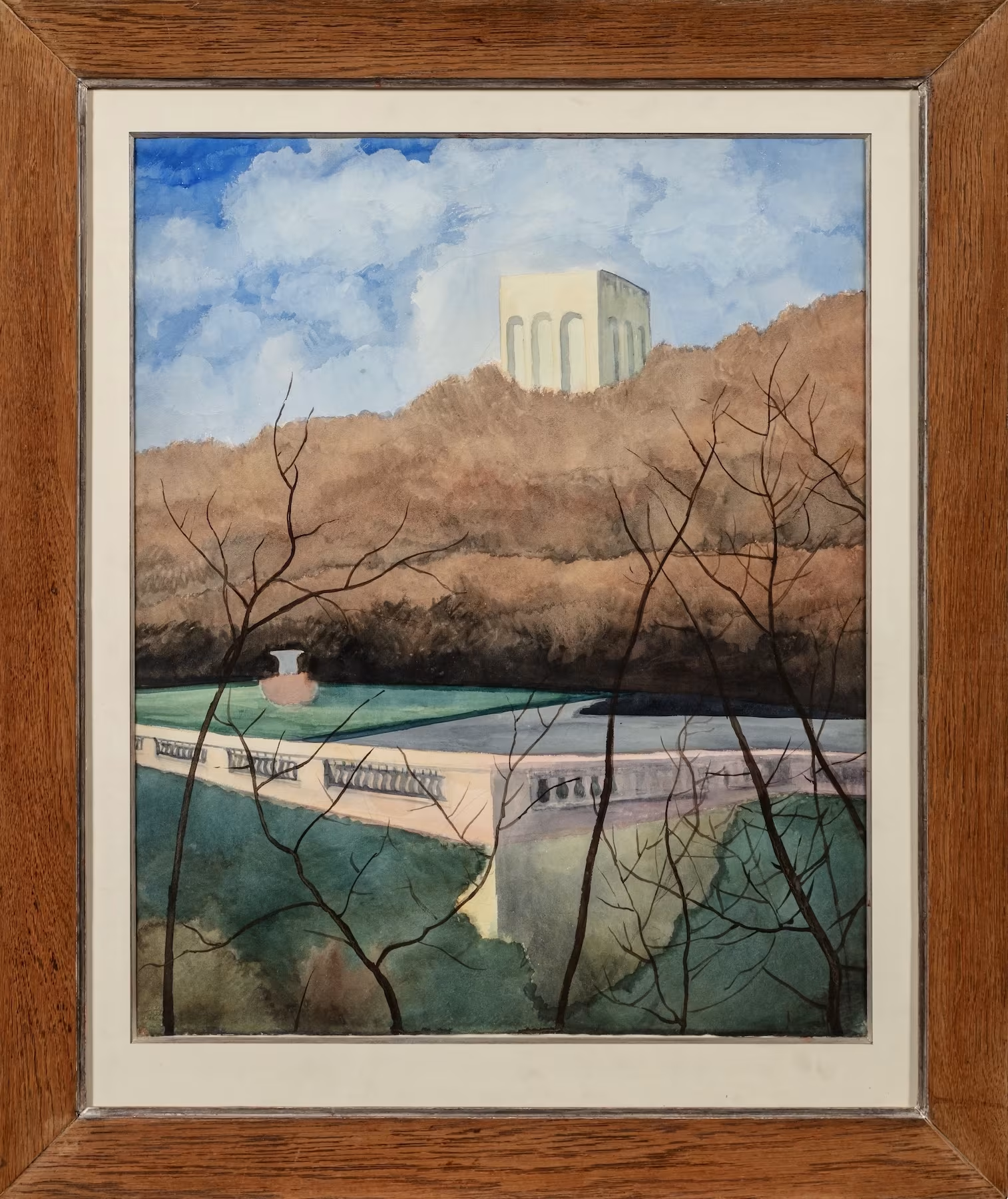
Spilliaert’s works often focus on an absence but an absence pregnant with emotion, often ungraspable and beyond language. Imbued with a dreamlike lucidity, they lend both to a familiarity but also, conversely, to a mystery. There is a sense, here, that time has gone slack and a pervasive, Tuesday afternoon weightiness fills the scene. Spilliaert’s work has a singularly Symbolist sensibility, it is almost as if his viewscapes are states of mind which invite the viewer not just to observe but to inhabit. Well-versed in literature, the influences of Allan Poe, Nietzsche and Lautréamont are on show in his work.
Born in Ostend, Léon was the eldest of the seven children of the perfumer, Léonard-Hubert Spilliaert. A somewhat reclusive child he spent much of his time drawing and doodling and was largely self-taught. Aged 18, in 1899, he went to the Bruges Academy of Art as a pupil of Pieter Raoux but was disapointed by it so left after only a year. Following this he went to work as an illustrator for Edmond Deman, a publisher of the works of Symbolist writers, who introduced him to the artistic milieu of Brussels. Following a painful break-up with Deman’s daughter, which sent him into a depression, he left Brussels for Paris. Deman put him in touch with the Symbolist poet Émile Verhaeren and asked for his assistance in setting Léon up as a publisher or printer. They met and a great friendship formed, with the poet buying some of his works and acquainting him with his friends and art dealers alike. This intense period in Paris a strong affect on him and by 1907, having moved back to Belgium, he was exhibiting regularly at many of the various salons in Brussels. Following WWI he collaborated with the avant-garde Sélection group and exhibited with them for many years. In 1922 he was made a Knight of the Order of the Crown.

