
Oil on canvas
61 x 91.5 cm
Signed and dated 'John Nash/1974'
Provenance:
With Agnews, London
John Nash was a lover of nature and dedicated his life to its appreciation and depiction. Despite engagement with artistic groups at the start of his career, notably the Cumberland Market Group in 1915, his commitment to landscape and singular approach meant he was truly never aligned with one. Along with his brother, Paul, and close friend Claughton Pellew, among others, Nash’s work tied in a with wider revival of the Romantic English landscape watercolour tradition, based on a harking back to a bygone era of rural peace and simplicity. Alongside a renewed interest in the spirituality within nature, born partly out of a mistrust of the modern in the years following the war.
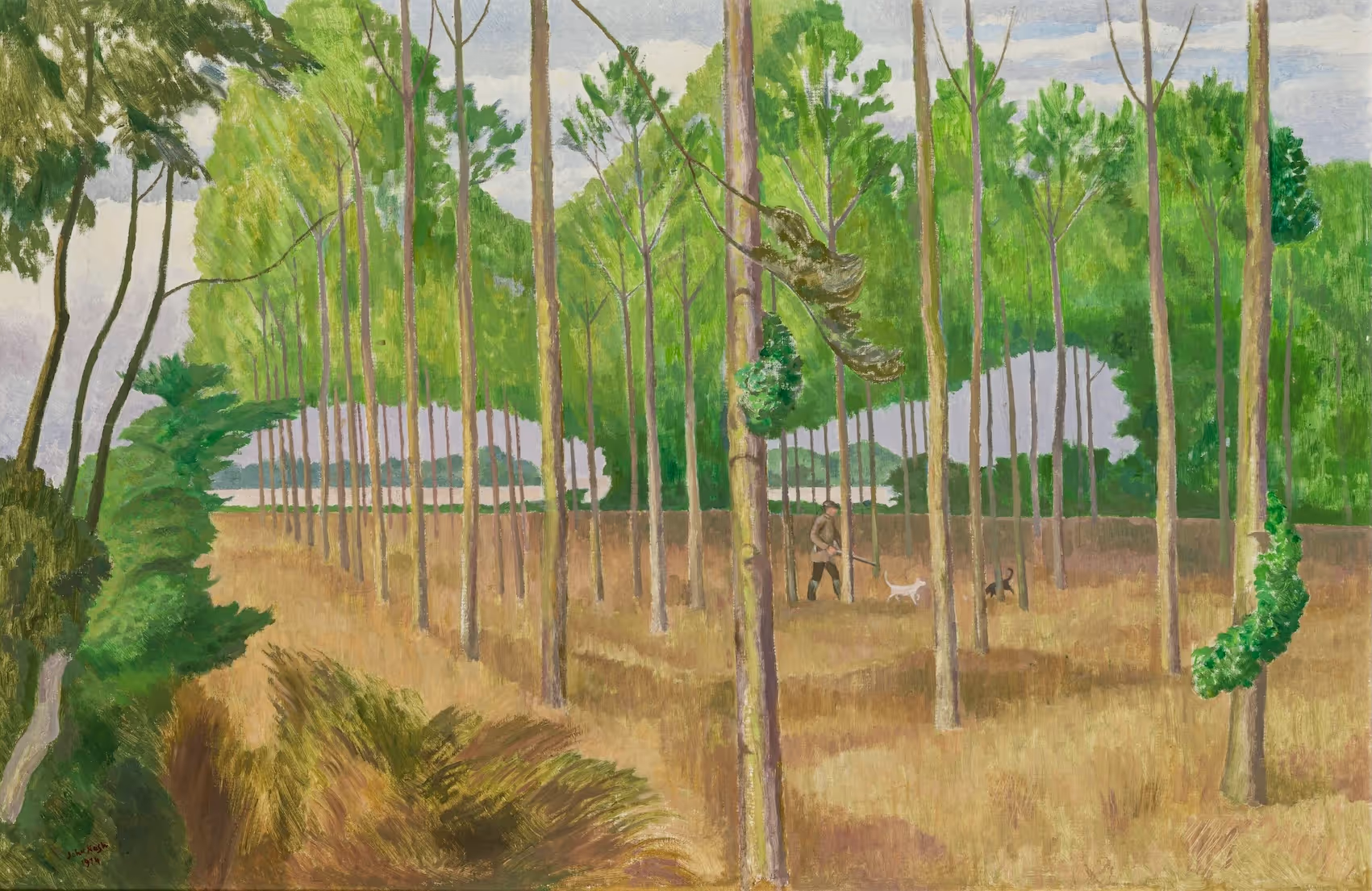
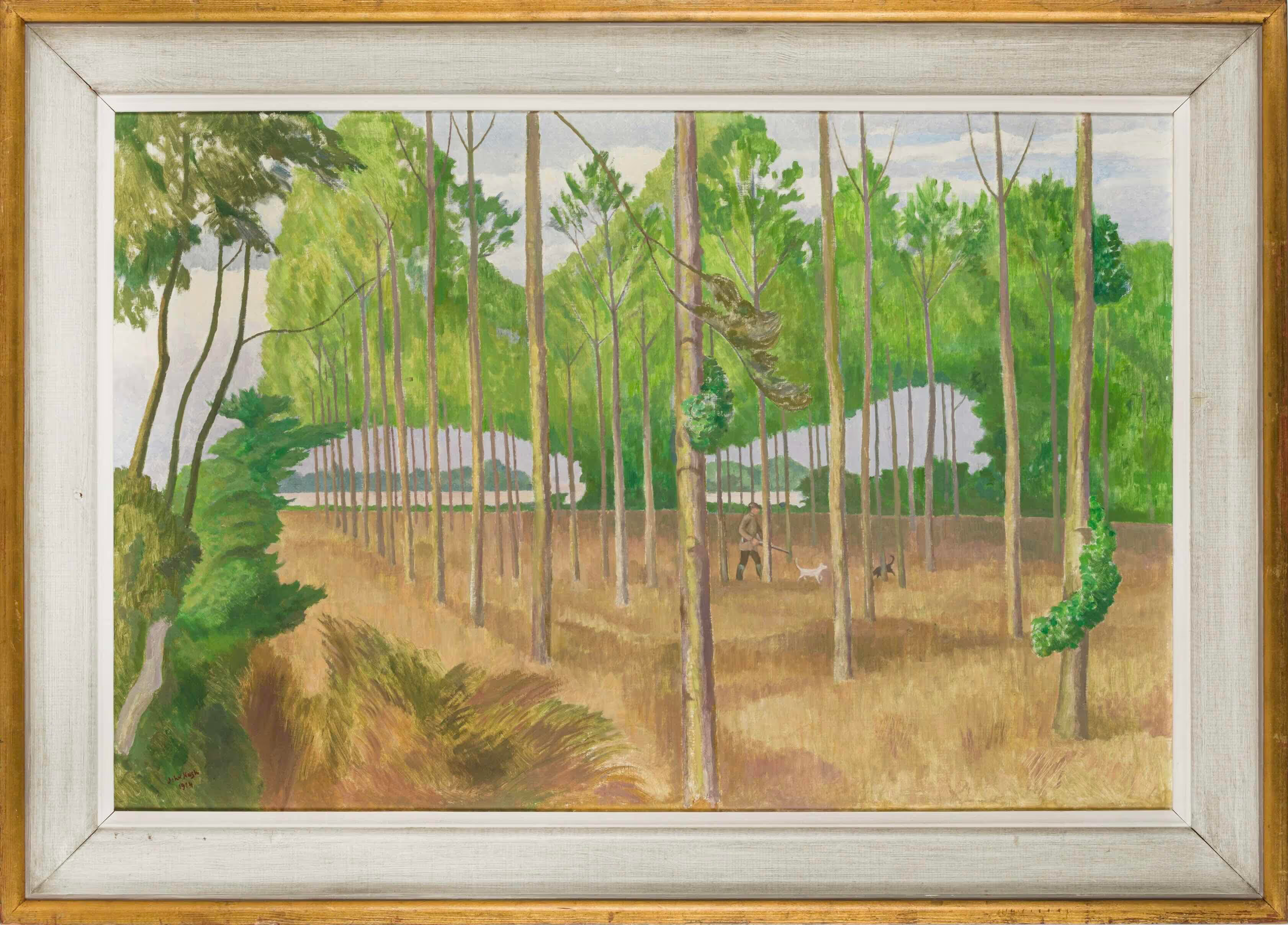
Human figures are rare in Nash’s painting’s and while a man he is present, here, he is very much within the landscape, complementing rather than commanding it. There is something anthropomorphic about this view, a face can almost be made out in the shape the trees make, reinforcing the idea that the subject is nature itself. An atmosphere of quiet yet profound peace pervades and as well as the subtle but powerful beauty of the English countryside. The viewer is drawn into this stillness and inhabits it; you can almost hear the leaves moving in the breeze and the soft crunch of the footsteps.
His style became an original and unique one, Sir William Rothenstein observed that ‘by a variety of modifications of the angles of the surface of fields, of hedges, the simplifications of complex subjects such as trees – at his best he seemed even to emphasize their complexity while making them in fact more legible….and on these chosen subjects he concentrated with a serene intensity that gives his finest paintings and watercolours a place among the English masterpieces of landscape. But it was primarily his power of imbuing ordinary landscapes with a poetic aura place him, at his best, among the memorable artists of his time.’1
Born in London in 1893, Nash worked as a journalist for a local newspaper before following his brother as an artist. In 1913 he became a member of the Friday Club, of the London Group in 1914, the Cumberland Market in 1915, the N.E.A.C. and the Society for Wood Engravers in 1921 and the Modern English Water-Colour Society in 1923. He became an Associate member of the Royal Academy in 1940, and a Member in 1951. He served with the Artists' Rifles during the First World War and became an Official War Artist in 1918. In 1922 he taught at the Oxford Ruskin School where he remained until 1927. Nash then taught at the R.C.A. from 1934 to 1940, and again in 1945 until 1957. During the Second World War he served in the Observer Corps. A retrospective exhibition of Nash's work was held in 1954 at the Leicester Galleries.
[1] Sir WilliamRothenstein, John Nash,(London, Macdonald & Co, 1983) pp.119-122
[1] Sir WilliamRothenstein, John Nash,(London, Macdonald & Co, 1983) p. 119

